When a passing test isn’t a fix
Benchmarks count an AI-written RTL fix as a repair when it passes one test. We checked those patches against the developer’s real fix, with proof where we could get it.
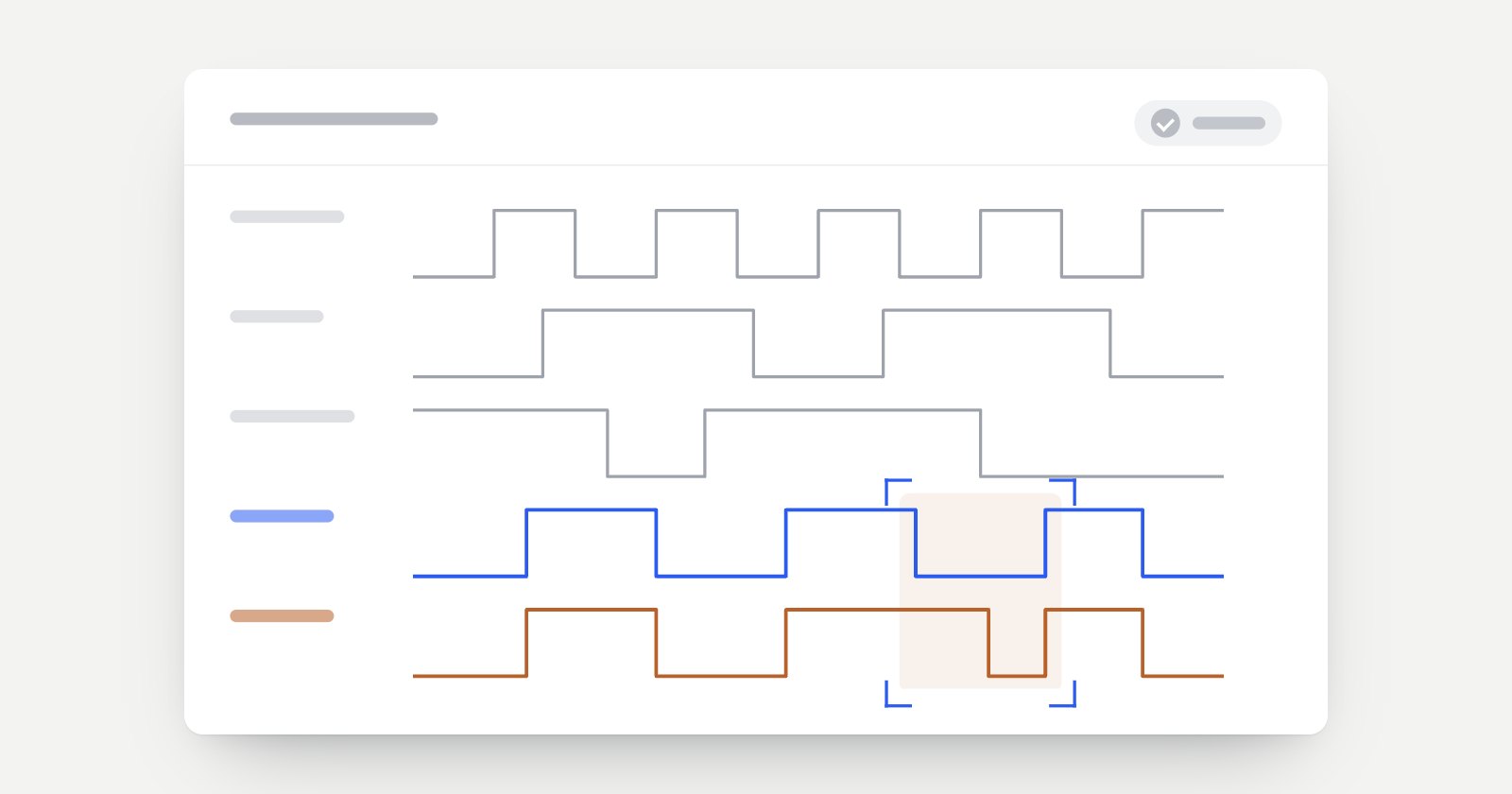
A passing test is a weak sign of a fix
Benchmarks for hardware bug fixing count a patch as a repair when it passes the benchmark’s test. That test covers a sliver of what a design can do. A trace or a directed test can pass while the patch is still wrong.
Software repair learned this years ago. Hardware has a stronger tool for the question: for synthesizable designs, whether a patch behaves exactly like the developer’s fix can often be proven.
A repair rate is only as good as its definition
If repair means “passes the test”, the rate counts some wrong patches as wins, and it cannot say which ones.
We compared each patch with the real fix
We checked every test-passing patch against the developer’s fix with formal equivalence checking. A check bounded to a number of cycles is labeled bounded and kept apart from a proof, and the patches that differ are read by hand, because a bug can have more than one correct fix.
A proof settles a repair
A patch proven equivalent to the developer’s fix is a repair. A patch that differs gets a closer look before any verdict: a bug can have more than one correct fix, and a real pull request often does more than its issue asks.